
Essay: When Club Communications Become Strategic
Many nonprofit and breed clubs treat communications as administrative tasks. In reality, strategic websites and newsletters play a critical role in volunteer retention, member engagement, and organizational continuity.
Over the past three decades, I have had the opportunity to work with and serve many nonprofit organizations, both as a consultant and in senior staff roles. That experience spans organizations across multiple sectors, as well as dog-related institutions including several breed clubs, the Canadian Kennel Club, and the Canadian Kennel Club Foundation. Those roles have allowed me to observe how organizations communicate internally with their members and externally with their broader communities, and the impacts their approaches have.
Across these experiences, one pattern appears consistently. The organizations that grow, adapt, and sustain their missions over time are those that treat communications as part of their strategy, not simply as an administrative task. Communications in nonprofit organizations can easily be viewed through a narrow lens, treated primarily as administrative outputs. Tasks such as announcements to prepare, updates to send out, minutes to distribute, or newsletters to assemble before a deadline arrives.
In reality, communications can, and should, do something far more significant. They should shape how members understand the organization, how knowledge is preserved, and how new participants enter and engage with the community. In volunteer-driven organizations, these communication choices often influence whether members remain engaged, step forward to volunteer, or gradually drift away.
While the importance of communication in sustaining clubs is not new, the tools available to us today are dramatically different from those available to earlier generations of club volunteers. Advances in digital publishing, design software, and online distribution have made communications faster, more cost-effective, and far more visually engaging than the photocopied newsletters and mailed updates many clubs once relied upon. These changes have not only streamlined the work of volunteers but have also created new opportunities for clubs to engage their members and share knowledge more effectively. Clubs have more communications capability today than ever before. The challenge is using it strategically. When these tools are aligned with a club’s broader goals, they can become powerful drivers of engagement and continuity.

Before digital publishing tools, many clubs relied on printed newsletters and postal distribution to share information with members.
For breed and all-breed dog clubs, this responsibility carries additional weight. These organizations do more than organize events or maintain membership rosters. They steward the historic and current knowledge, culture, and long-term future of the breeds and communities they represent. How information moves through a club influences how effectively that stewardship continues from one generation of participants to the next.
Research in nonprofit communications has consistently found that many organizations operate in reactive communication patterns, focusing primarily on distributing information rather than shaping narrative or engagement (Heath & Curtin). When communications are approached strategically, however, these same tools can become powerful drivers of engagement, education, and institutional continuity.
This month’s Perspectives article focuses specifically on all-breed and breed clubs, though the principles apply to many nonprofit organizations. In particular, it focuses on two communications tools that sit at the center of a club’s communications ecosystem. The club website and the club publication or newsletter.
How These Tools Are Often Treated
For many nonprofit and breed clubs, communications systems evolve informally over time, leaving websites and newsletters underused as tools for engagement and long-term knowledge preservation. When communications systems evolve organically, a newsletter begins because members want updates and a website is created so the club has an online presence. Over time, volunteers step forward to maintain these tools and keep them functioning. Newsletters often evolve into collections of announcements, event results, and member updates. Websites frequently function as archives. They house important documents, event information, and historical records but are rarely revisited strategically after their initial launch.
This pattern is common across the nonprofit sector. Research on nonprofit digital communication has shown that many organizations use websites primarily as static information repositories rather than as tools for stakeholder engagement and mission reinforcement (Saxton & Ho). None of this is inherently problematic.
Volunteer-driven organizations operate under real constraints of time and capacity. Communications systems often develop incrementally as clubs respond to immediate needs.
“The single most important element in sustaining a club and its membership is communication.”
These constraints also affect volunteer sustainability. In many clubs, a small number of dedicated individuals carry a large portion of the organizational workload. When communications tools do not clearly illustrate the breadth of activity across the club, members may not realize where help is needed or how they might contribute.
Strategic communications help distribute that awareness and invite members to see where their own contributions might fit. Such communications make the work of committees visible, highlight volunteer contributions, and demonstrate how individual efforts support broader club goals. Over time, this visibility can reduce burnout by encouraging wider participation across the membership.
What Happens When Communications Are Designed With Purpose
When clubs step back and consider the role communications should play in the life of the organization, websites and newsletters begin to function very differently.
A thoughtfully designed website becomes more than an information repository. It becomes the institutional home of the club. A place where prospective members can understand the organization’s purpose, where educational resources about the breed are preserved, and where the club’s activities and priorities are presented clearly to the broader community.
Similarly, a well-structured newsletter or publication becomes more than a periodic update. It becomes an ongoing narrative connecting members to the life of the club and their club community.
Through strategic and intentional content, members see the work being done across committees, the accomplishments of fellow participants, and the initiatives shaping the organization’s future. Articles provide context, education, and continuity, allowing knowledge and experience to move across generations of participants. When members can clearly see the life of their club unfolding through its communications, they are far more likely to feel connected to that work and inspired to contribute to it.
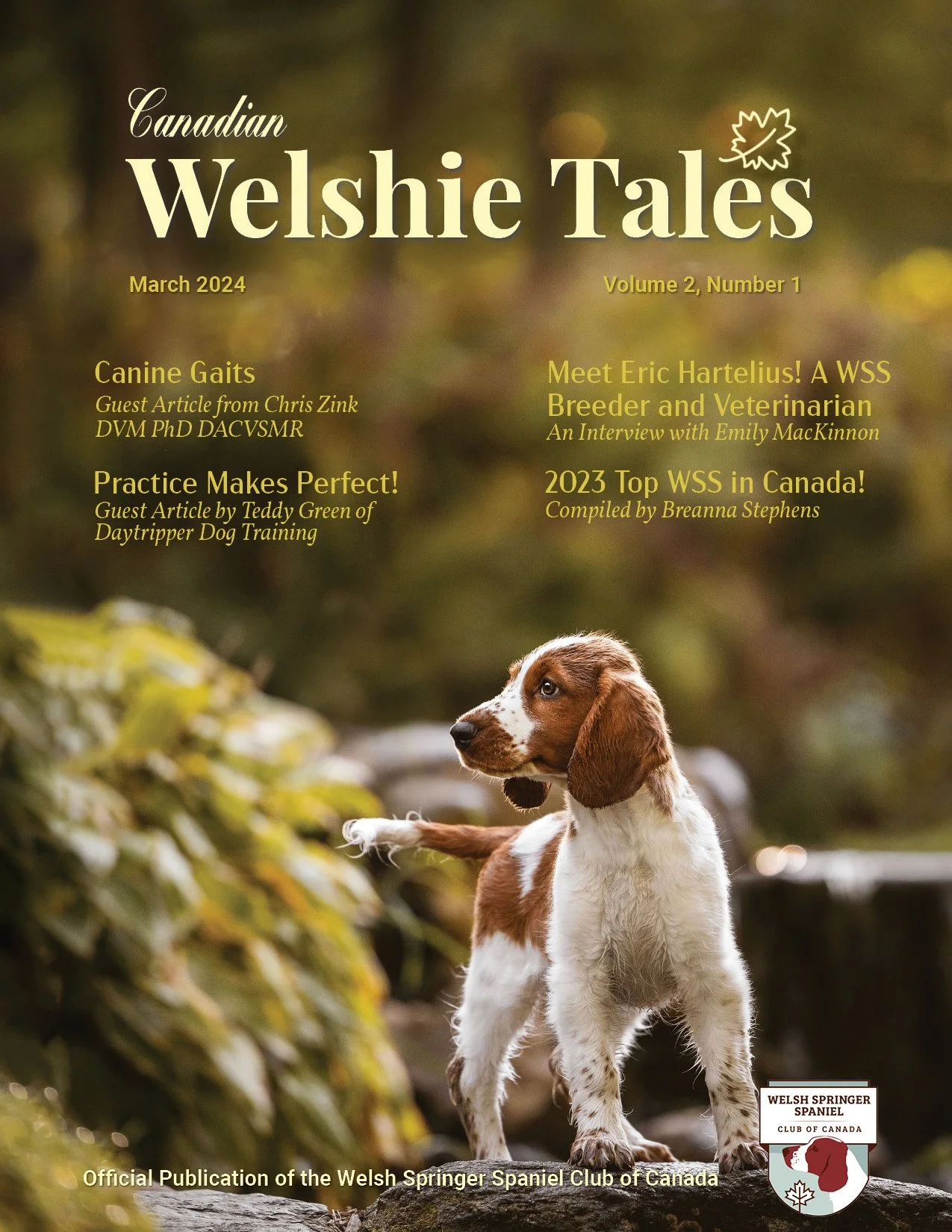
The March 2024 Cover of Canadian Welshie Tales, the Welsh Springer Spaniel Club of Canada’s official publication.
This approach was central to the creation of Canadian Welshie Tales, the official publication of the Welsh Springer Spaniel Club of Canada. Rather than functioning solely as a collection of announcements and event results, the publication was intentionally structured to support several broader goals.
These include educational initiatives that resonate with different member cohorts, preservation of breed knowledge and history, highlights of owner and breeder experiences, and storytelling that strengthens connections within the Welsh Springer Spaniel community.
Equally important, the publication provides visibility into the life of the club itself. By showcasing volunteer work, community achievements, and shared experiences, it helps reinforce the sense of connection that encourages members to remain engaged with the organization over time.
When communications are designed in this way, newsletters and websites begin to reinforce each other. The website provides the stable foundation for the organization’s knowledge and public presence. The publication provides the rhythm of ongoing communication that keeps members connected to the club’s work and culture.
Together, they create continuity. They help ensure that the knowledge, experiences, and contributions of today’s members remain accessible to those who will carry the organization forward.
Transactional Communications and Strategic Communications
One useful way to understand the difference between these approaches is to consider the distinction between transactional and strategic communications.
Transactional communications focus primarily on distributing information. A newsletter is assembled because one is due. Content arrives from various sources, is compiled into an issue, and then distributed to members.
This approach keeps information moving, which is valuable. However, it rarely shapes how members understand the organization or where it is headed. Over time, this can affect engagement and retention. Members who only receive transactional updates may struggle to see how the organization is evolving or where they fit within it. Research on volunteer participation has shown that individuals are far more likely to remain involved when they feel connected to the community around an organization, not simply informed about its activities (Brown & Ferris).
Strategic communications take a broader view. Content is curated with intention. Articles and updates are selected not only because they exist, but because they contribute to the narrative the organization is building about itself.
Organizational communication research has long emphasized the role of narrative in shaping institutional identity and shared understanding within communities (Boje). When clubs apply this perspective to their publications, newsletters become vehicles for reinforcing priorities, sharing knowledge, and strengthening the culture that sustains volunteer organizations.
Educational articles deepen members’ understanding of important topics related to their dogs. Stories of participation highlight the experiences of fellow enthusiasts. Volunteer contributions demonstrate the work happening across the organization and its importance in reaching club goals.
The result is not simply a better newsletter. It is a stronger organizational culture.
Three Common Communications Challenges in Nonprofit and Breed Clubs
Many clubs will recognize one of these patterns.
1. The Archive Newsletter
The newsletter arrives regularly and contains useful information. Event results, announcements, and updates are included. Members read it briefly, then move on. Over time, engagement declines because members struggle to see how the pieces fit together or how the club is evolving.
2. The Overextended Volunteer Club
A small group of dedicated volunteers carries most of the club’s workload. Many members are unaware of the scope of that work because communications rarely highlight the efforts behind the scenes. Volunteers begin to burn out while other members remain unsure how they might contribute.
3. The Strategic Communications Club
The website clearly presents the club’s mission, activities, and educational resources. The newsletter tells the story of the club’s work, highlighting members, volunteers, and initiatives. New members quickly understand how the organization functions and where they can participate. Engagement grows because members see themselves as part of a shared effort.
Communications and the Future of the Club
Many clubs today are also thinking about generational continuity. How do we attract younger participants? How do we ensure that new members feel welcomed into an established community? How do we encourage experienced members to share their knowledge while new voices emerge within the organization?
Communications play a central role in this transition. Websites and publications are often the first point of contact for prospective members exploring a breed or sport. The tone, structure, and content of those communications influence whether newcomers feel invited into the community or uncertain about how to participate.
At the same time, thoughtful storytelling and educational content ensure that the experience of long-time members remains visible and valued. When these elements are balanced effectively, communications help bridge generations within the club, supporting both continuity and renewal.
Stewardship Through Communication
Organizations dedicated to dogs carry responsibilities that extend well beyond administration or event management. These clubs serve as stewards of knowledge, history, culture, and community.
Gerry Curry, current Welsh Springer Spaniel Club of Canda member and a founding member of the early iteration of the club in the 1980s, reflected on how dramatically club communications have evolved over time. “The single most important element in sustaining a club and its membership is communication. When I helped create the first iteration of the Welsh Springer Spaniel Club of Canada in the 1980s, we were on the cusp of the transition to a digital world. At that time clubs relied on photocopies and the postal service for most of their communications. These were costly to produce and distribute, and design was limited. Today we have easy access to creative tools and near-instant distribution, making communications far more engaging and helping clubs maintain member interest.”
Research in knowledge management has shown that communication systems play an essential role in preserving institutional knowledge, particularly in volunteer organizations where leadership turnover can otherwise lead to the loss of valuable experience and expertise.
The decisions made today about how information is shared, preserved, and communicated will shape how future participants understand the breed or club and the community that surrounds it.
Websites and newsletters are therefore more than communications tools. They are part of the institutional memory of the organization, critical to its future growth, and catalysts for a vibrant community dedicated to the club’s mission. When approached strategically, they help ensure that the work of today’s volunteers, breeders, competitors, and enthusiasts remains visible and meaningful for the generations that follow. When clubs approach these tools intentionally, they do more than share information. They cultivate the sense of community, purpose, and shared stewardship that keeps members engaged and ensures the organization continues to thrive.
For nonprofit and breed clubs, communications are no longer simply another task on a volunteer’s to-do list. They become part of the infrastructure that allows clubs to grow, adapt, and carry their mission forward.
Selected References
Boje, D. M. (1991). The storytelling organization: A study of story performance in an office-supply firm. Administrative Science Quarterly, 36(1), 106–126. https://doi.org/10.2307/2393432
Brown, E., & Ferris, J. M. (2007). Social capital and philanthropy: An analysis of the impact of social capital on individual giving and volunteering. Nonprofit and Voluntary Sector Quarterly, 36(1), 85–99. https://doi.org/10.1177/0899764006293178
Ellis, S. J. (2010). From the Top Down: The Executive Role in Volunteer Program Success. Energize Inc.
Grunig, J. E., Grunig, L. A., & Dozier, D. M. (2002). Excellent public relations and effective organizations: A study of communication management in three countries. Lawrence Erlbaum Associates.
Heath, R. L., & Curtin, P. A. (2001). Public relations and nonprofit organizations. In R. L. Heath (Ed.), Handbook of Public Relations (pp. 337–351). Sage Publications.
Nonaka, I., & Takeuchi, H. (1995). The Knowledge-Creating Company. Oxford University Press.
Saxton, G. D., & Guo, C. (2011). Accountability online: Understanding the web-based accountability practices of nonprofit organizations. Nonprofit and Voluntary Sector Quarterly, 40(2), 270–295. https://doi.org/10.1177/0899764009341086